Strategy

How to create a great product strategy: What can we learn from McKinsey?

Updated: Feb 25, 2026
How to create a great product strategy: What can we learn from McKinsey?
DISCLAIMER OF AFFILIATION: Slideworks is an independent entity and is not affiliated or endorsed by, or in any way officially connected with BCG, McKinsey or Bain. All references to these companies are for informational or comparative purposes only and does not imply any association with or endorsement by the aforementioned companies.

Summary: McKinsey, BCG, and Bain consultants use a defined three-step approach to product strategy:

  1. Why should we do this? -> The strategic rationale and high-level vision and direction
  2. What does it look like? -> The product elements and features
  3. How will we get there? -> The roadmap

This approach both anchors the strategy at leadership level, creates an inspiring vision, and allows the product strategy to act as a day-to-day prioritization tool. This article digs into the details of this approach.

In today's competitive landscape, your product strategy can make the difference between market leadership and obsolescence. As former management consultants who've guided Fortune 500 companies through strategic transformations, we've learned that successful products aren't built by chance—they're the result of deliberate strategic choices focused on creating superior customer value.


To be sure, anyone from a newly minted MBA to a seasoned product leader can recite the core elements of a basic product strategy. You’ll need something about your goals and target audience. You’ll need a compelling value proposition…you’ll ask yourself, “Why should customers buy our product?” There should be some market and competitive analysis, a timeline, and a roadmap. And don’t forget something about how you will measure success. 


But when the stakes are high, a basic strategy document or rudimentary outline from your favorite AI tool won’t do. Too often, the terms "vision," "mission," "strategy," "goals," and "roadmap" get conflated into a jumbled mess — leaving product leaders without the context they need to focus their work on the difficult task of moving the company forward.
It is impossible to make rigorous prioritization decisions when the guidance on how to do so is missing, unclear or disconnected from what you are trying to do.
You need a strategy that goes to the heart of your business’s mission and purpose. It has to be clear, convincing and compelling — the kind of document your boss’s boss brags about and gets passed around VPs as a model. In short, you need the best. 


So, how do you develop the best product strategy deck?  

One source of inspiration is to look at how top-tier consulting firms like McKinsey, Bain and BCG think and communicate about product strategy. During our time as MBB consultants we developed and advised dozens of corporations on product strategy and especially how you transformed the ideas and thoughts into C-level-ready, best-practice decks.

In this article, we’ll review what a product strategy is, why it’s important and the elements of an effective product strategy presentation based on the McKinsey approach.


What is a product strategy?

A product strategy is your organization's approach to creating superior customer value in a competitive marketplace. Typically, a product strategy document will address fundamental questions such as:

  • How will we beat competitors in the customer value game?
  • What specific product improvements or innovations will drive growth?
  • How will we build sustainable competitive advantages?

A winning product strategy isn't just a collection of features and roadmaps—it's about systematically improving the customer value equation through both rational and emotional benefits while maintaining competitive pricing.

Customer value equation

Customer value is the gap between perceived benefits and price paid. Improving this is the overarching purpose of a product strategy.

How is a product strategy different from a business strategy?

The business strategy is the overall umbrella strategy for the entire organization and the product strategy is specifically how product X will be improved and why.
The business or corporate strategy translates the company vision and mission into goals and high-level initiatives while the product strategy is the plan for how that product will contribute to the overall company strategy. 


Importantly, a product strategy doesn’t exist in isolation from the company’s mission or business strategy — it is instead a vital part of how a company will achieve its aspirations in line with its business strategy and goals. It also integrates and aligns with other key corporate strategies, such as marketing, sales, and technology but typically the main focus is on the customer/user needs and how your product will fulfill those needs. 

An example of this could be an AI player. Here the different layers of strategy could be the following:

  • Company mission: Create reliable and manageable AI systems
  • Business strategy: Focus on enterprise customers with new AI tools for Microsoft suite
  • Product strategy: For our PowerPoint AI tool, prioritize text manipulation feature and prompt-first editing for professionals that use PowerPoint on daily basis

The different strategy layers work together in symbiosis with the overall mission acting as a North star, the business/corporate strategy deciding on overall focus and resource allocation, and the product strategy transforming that direction and those resources into a winning product that ultimately makes customers happy and turns into sales.


Depending on company size, product strategy and business strategy may become one document, where the product part is one or more of the key initiatives.


Why is a product strategy important?

The product strategy is a way to ensure your product systematically and intentionally delivers superior value to customers leading to gaining market share and eventually sales. It works in conjunction with go-to-market strategy (distribution of your product).


Like any other strategy, the main purpose of a product strategy is to give direction and act as a prioritization tool. A great product strategy's clarity focuses the organization's resources on the priorities and projects that matter most. 

As any leader will tell you, it’s all too easy for even the best organizations to operate in silos and focus on the wrong things, spreading resources too thin across multiple initiatives and failing to create meaningful differentiation in any area.


A product strategy tells your product team what to work on and why. It allows them the framework to make both large decisions (go in a completely new direction or invest in high-end design) and small day-to-day decisions (should we prioritize working on this feature improvement or spend time on developing a new one instead).


A great product strategy allows any member of your team to understand the bigger picture, be inspired by it, and use it as a daily or weekly tool to make decisions.

When do you need a product strategy?

In short, you need a product strategy whenever you have a product. This somewhat redundant answer means you should always have a vision, high-level goals, and a direction that can be used to say yes/no to daily tasks if you have a product that you’re improving and growing. In some organizations, the product strategy will be a stand-alone document while in others it may be part of the wider corporate or business unit strategy.

Regardless, you need a product strategy (or elements of it) whenever you have people and money that you plan to use to improve/grow a product and need to decide what they should spend time doing Monday morning.


How does McKinsey write a product strategy presentation?

McKinsey’s approach to product strategy involves three steps, each asking a critical question:

  1. Why should we do this?
  2. What does it look like?
  3. How will we get there?

While simple on the surface, how a team answers these questions to develop a well-thought-out product strategy is key.

Once you address those three questions, you should also consider two additional steps:

  • How to communicate your product strategy
  • How to execute (and follow up on) your product strategy

Let’s take a closer look at McKinsey’s method for product strategy.


Step 1: Why should we do this?

One of the reasons McKinsey is so effective in working with CEOs and other top leaders is that it often starts with “the Why.” The tactical details of any plan on any business topic are critical and deserve significant attention. However, continuously anchoring work in the why of the company, division, or high-level goal, tends to produce better alignment and outcomes.

That’s not to say you need a McKinsey consultant or other outside firm to gain this perspective…every leader and team gets caught up in the day-to-day pressures and getting things done. Using an approach like McKinsey’s can help you rise above tactical execution and strengthen alignment with the strategy and priorities that are top of mind for your leadership team.


In McKinsey’s product strategy approach, there are two elements to articulating the Why:

  • Outline the point of departure: Understand where you’re coming from in terms of the competitive situation, the market dynamics, any internal and external opportunities and threats, and potentially a business need for a new product strategy. The point of departure provides the strategic context for any decisions you might make, so it never happens in a vacuum. 
  • Define the ambition and vision for the product: Define the overall North Star guiding the product, why it will benefit your broader business strategy, and especially how the product will create sustained competitive advantages.


These two elements place your product strategy work in combination to create the Big Picture of where your product is going and why.


Your overall product strategy should have a clear storyline. However, if there is one section where you should take extra care to ensure that your messaging is crisp and compelling, it’s this one. Using a communication framework like the pyramid principle can help ensure your Why hooks your audience from the first slide.


Step 2: What does it look like?

After articulating a clear Why in step one, you must articulate “the What” of the product strategy. This section will feel intuitive or familiar for some teams, but the best teams approach this area with care to capture the total opportunity.


If Step 1 is your overall hypothesis for the product’s potential, Step 2 is where you will validate and deepen your hypothesis with data-backed assertions on your customer needs, value proposition, market opportunity and business case. In this section, you ideally outline each component of the product that will make it work, from who you’re building it for to what you’ll build and what the team, business model, operations setup etc. will look like. If you’re familiar with the tried-and-tested Business Model Canvas [LINK] then you can think of this section as a way of digging into each box on the BMC with executive-ready slides.

This section will also be shorter or longer, depending on what stage your product is at and what type of product or setup it is. For quarterly product updates, it will likely be very short and focus primarily on changes in selected components (e.g., new user needs that have surfaced, new features, or team changes to take the product in a different direction). For full-blown new venture decks like the ones created by McKinsey Leap or BCG Digital Ventures/BCG-X, then you’ll likely include all components in some detail.

Regardless of which type of product strategy deck you’re creating, you want to make sure you pay special attention to the following five essential elements:

  • Go deep on the customer needs or pain points your product will address: A winning product strategy demonstrates a deep understanding of the target audience’s met and unmet needs. Go beyond just demographic or exterior segmentation and segment on jobs-to-be-done. Creating personas with catchy names and distinct “personalities” makes it easier to get your audience on board and invested in the product solution you propose later.
     
  • Take a systematic approach to your value proposition: Position your solution components and features as answers to the customer needs and pain points you listed previously. If a feature cannot be directly linked to a customer need or pain point, you likely don’t need it.
    To keep your stakeholders aligned with your strategy, it helps to divide the product components up by “big rocks” meaning the main solution components, “small rocks” meaning the smaller features and tweaks within those components, and “sand” meaning the details like colors of buttons or other things.
    Although it’s originally a time management analogy, it helps your stakeholders and audience understand what your product should succeed with and why.
  • Place your product in its competitive environment: Your product never exists in a vacuum. Even a completely new product exists within some customer job-to-be-done and thus has competitive solutions. To ensure stakeholders you’ve developed a competitive strategy, you should place your solution in the overall competitive landscape and highlight how your product is differentiated. Differentiation can be on how well you solve the customer need (doing it better and/or going more niche) or by solving the need in a cheaper manner.
    A solid product strategy deck includes a well-considered review of the competitive position, where the market may be going, and how your product will win in the market (ideally long-term).
     
  • Don’t just consider the product itself, but also the pieces around it: Your product strategy presentation should not just include product details and features, but also consider the surrounding enabling factors. This is especially true for new products and ventures. These include things like operations and processes, IT systems, branding, marketing, and distribution. Some of these elements will naturally spill into a go-to-market strategy, and the two are linked and complementary.
    An often overlooked aspect of a new product or venture is governance, both how decisions will ultimately be made, where the decision power lies, and how the product team will interface with the rest of the organization.
     
  • Develop a convincing business case: Leading strategy and product teams include a highly detailed and pressure-tested business case in their product strategies. They know that colleagues will check their assumptions with their experience and use an array of tools, such as business intelligence platforms, predictive analytics and AI-powered data validation and scenario testing. 
    When developing a product strategy, McKinsey will often use its approach to business case development from other contexts, from implementing a new IT system to building more manufacturing capacity. That’s because the core purpose is the same – a team needs a solid business case to secure buy-in, funding and resources from company leadership. While the business case in a product strategy may be abbreviated, any team preparing a product strategy will benefit from a tried-and-true approach to developing a business case that McKinsey, Bain and other firms use daily


Step 3: How will we get there?

Once you’ve set a compelling North Star (the Why) and outlined the key aspects of your product (the What), it’s time to show your stakeholders how you’ll achieve this. The How is the concrete plan for turning your What into reality. It should include financial projections, a timeline and roadmap toward success and a candid assessment of risks to the strategy's success. 

The more senior your stakeholders/audience are, the more important this section is in your product strategy presentation. 


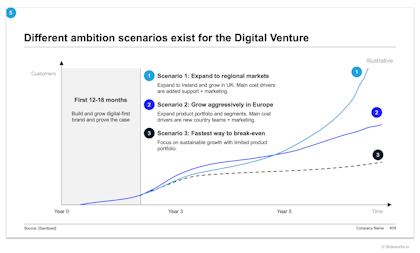
Starting with financial implications, this means scenario planning for various market conditions and potential setbacks. Financial projections are especially important for new products or ventures, and help stakeholders and leadership understand what they are signing up for, as well as get everyone aligned on a chosen growth strategy and the expected impact. You can use back-of-the-envelope calculations or detailed financial models, depending on how much data you have available.

Just don’t fall into the trap of trying to get it exactly “right” and spending too much time creating models. This can both be an unproductive use of time and lead to a false sense of accuracy. Instead, aim to give realistic ranges that fit the format and granularity commonly used by the organization.

A useful hack when creating financial projections and business cases is to use the standard format or old cases that the organization has previously approved. Stick to the level of detail and structure in these. This gives decision makers a known format and benchmark and means they only have to spend time digesting your specific case.

Next, a strong product strategy will also include a clear implementation timeline that accounts for dependencies and critical decision points. This isn't just about listing key dates – it's about demonstrating that the team understands the complexity of bringing a new product to market. The roadmap should highlight major milestones while maintaining flexibility to adapt to changing market conditions or customer feedback.
 

When preparing a product strategy, it’s important that teams balance sharing the level of detail they need to run the program versus what management needs to endorse the product strategy. In other words, teams should not make this section of the strategy document their team’s work plan. At a minimum, a solid product strategy document should include a high-level roadmap for the product's build, implementation, and scale phases, plus a detailed roadmap of the next phase after gaining leadership’s approval to proceed.

Risk assessment in this section requires special attention. Top consulting firms like McKinsey typically approach this from numerous angles, including technical feasibility, market risks, operational challenges and financial vulnerabilities. You should include specific mitigation strategies for each identified risk so leadership sees that the team has thought through potential pitfalls.


Finally, an outline of the next steps is a small but important detail to include in the How section of a product strategy. For most executive audiences, this can be a simple bulleted list outlining the three to five immediate actions once the team gets the green light to proceed. Some companies will prefer to see a more detailed set of next steps, for example, following an “EWBEWBEW” structure (exactly what, by exactly who, by exactly when). Regardless of format, the point of the next steps slide is to communicate that the team is ready to move forward quickly. Note: the next steps should not be confused with the roadmap for the next phase noted above.


How to communicate your product strategy

Even the best strategy can fail if it is not sufficiently or artfully communicated to key stakeholders. As you share the results of your hard work on strategy, consider the following points to ensure you get the buy-in and understanding you need to move forward.

  • Map out your stakeholders:
    You probably have a good sense of your stakeholder group from developing your strategy. Still, there are likely additional key leaders, experts and collaborators who you need on board to move forward. Take the time to identify those individuals and ensure you are engaging the “right” leaders with sufficient authority to engage in your strategy, especially when company resources are in their control and are a requirement for your strategy to succeed. Think through the outreach sequence as well — you may need to front-load a few discussions before others, even if it doesn’t completely align with your organizational hierarchy. Each stakeholder’s personal preference for involvement should be your guiding stick.
     
  • Distill your key messages and identify your ask:
    As important as your strategy is to you (and maybe to the company), colleagues at all levels are busy balancing a range of business and personal priorities on any given day. You need to make sure your strategy has 3-5 short and memorable key messages and a clear ask for every stakeholder so that people who don’t read your strategy deck cover to cover can weigh in. 
     
  • Adjust your format to your audience:
    C-level audiences often respond best to short, to-the-point product strategy decks (think 10-15 clear slides), sometimes combined with an extensive preread so each person can dive into a topic if they find it relevant. Your product team will likely want a much more detailed deck, with an emphasis on the What, while you need a full end-to-end report for the preread and/or to circulate as a full investment deck.
    Make sure you adjust the format to fit each audience’s needs. Best practice is to keep one long, “full” deck with all parts and distill this into an appropriate format when needed. Our Product Strategy template contains examples for all these different types of decks.
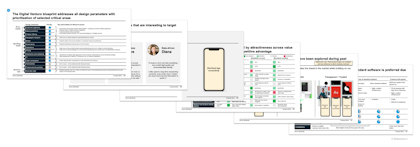
How to communicate your product strategy effectively

How to execute your product strategy

It’s been said that “strategy without execution is hallucination.” Executing your product strategy is a major topic and worthy of a blog post of its own (and the subject of dozens of Harvard Business Review articles, books, seminars, etc). Based on our experience in management consulting, we’ll share three tips:

  • Set up metrics to measure success: 
    You have KPIs for your product…but how about for the progress toward launch? Identify the milestones and metrics that indicate your launch effort is progressing, and track them rigorously.
     
  • Be transparent about the KPIs and status:
    When it comes to KPIs, sometimes teams confuse “tracking” with “driving”- your team needs to drive the product toward launch or continued growth, and that means full transparency, high visibility, and accountability for the project's progress (or lack thereof). Equally important is transparency toward leadership, to ensure any bumps in the road are identified early on and do not come as a surprise.
     
  • Schedule regular reviews and be ready to adapt your strategy:
    Even a “perfect” strategy is based on a snapshot of assumptions, trends, and knowledge from a certain point in time. Things change, and a hallmark of a well-run execution phase is the ability of the team and its strategy to adapt over time. Build this into your roadmap and scheduling to tackle the inevitable challenges proactively.


What’s the difference between a product roadmap and a product strategy?

Leaders and teams will sometimes use terms like roadmap, strategy, plan, etc. interchangeably, and you should get clarity on expectations early on so that your strategy document hits the right note.
 

A product strategy is a high-level plan that:

  • Focuses on the "why" and "what"
  • Defines your key customer segments
  • Defines how you'll win in the market
  • Sets direction for product development in terms of big features
  • Typically spans 2-5 years
     

A product roadmap is more tactical…think of it as the step-by-step plan for executing that strategy over time. A roadmap:

  • Focuses on the "how" and "when"
  • Details specific features and releases
  • Sequences development activities
  • Allocates resources
  • Typically spans 3-24 months


It’s important to distinguish between the two and not get caught up only in the day-to-day product roadmap. When we lock ourselves into planning to build a set of features (or a “roadmap only” approach), we rarely question whether those features are the right things to build to reach our goals. We stop focusing on the outcomes and judge teams' success by their outputs.


A McKinsey-style product strategy includes elements of what you might expect in a roadmap but leads with “the Why” of strategy. Roadmaps will naturally touch on strategy topics as well. 


Check out our FAQ section below for more common questions about product strategy.


Accelerate your product strategy with a McKinsey-style template

One of the ways firms like McKinsey deliver great strategies and ideas is by leveraging comprehensive template libraries. These knowledge repositories enable consultants to focus on the client’s situation and creative problem-solving versus reinventing the wheel in terms of storyline and slide layouts. Plus, seeing templates and examples can help push a team's thinking, reframe approaches and spur fresh ideas. 


Accelerate your team’s product strategy with our McKinsey-style product strategy template, which includes hundreds of template pages following the three-step framework outlined above, three Excel models, and five real-world Fortune 500 product strategy examples. The template is built on our own case experience from McKinsey, BCG, and Bain.

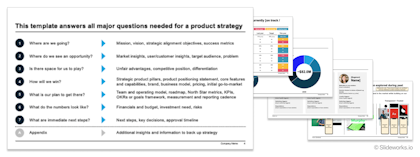
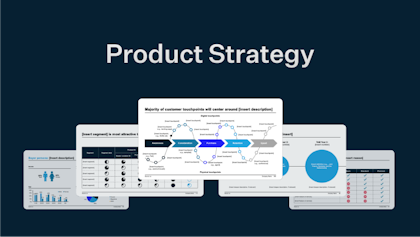
The Slideworks Product Strategy template contains ready-to-use template slides, full-length examples, and helpful tips for creating a best-practice product strategy.

The Slideworks Product Strategy template contains ready-to-use template slides, full-length examples, and helpful tips for creating a best-practice product strategy.

Frequently Asked Questions (FAQ)

What is a product strategy?

A product strategy is your organization's approach to creating superior customer value in a competitive marketplace. It addresses fundamental questions such as: How will we beat competitors in the customer value game? What specific product improvements or innovations will drive growth? How will we build sustainable competitive advantages?


How is a product strategy different from a business strategy?

While business strategy sets overall company direction, product strategy is more focused on the customers/users and solution details. Business strategy orchestrates the full symphony of corporate priorities; product strategy conducts the specific movements that create customer value and drive market share gains.


What are the elements of a product strategy?

A first-rate product strategy addresses three fundamental components: the Why (market opportunity and vision), the What (customer needs, value proposition, and business case), and the How (implementation roadmap and risk mitigation). Each element must withstand rigorous scrutiny from stakeholders while demonstrating clear alignment with company goals.


What time horizon should a product strategy typically cover?

This depends a lot on the specific market context, but a typical time horizon is 2-5 years. This timeframe balances the need for bold market moves with practical execution constraints. Shorter horizons risk tactical thinking; longer ones lose credibility in today's dynamic markets.


How often should a product strategy be reviewed and updated?

The product strategy should be a living document. The overall Why and North Star should not be updated or adjusted more than once every 1-3 years (if you find the need to update it more, then it is either too tactical or your overall strategy too opportunistic).
The rest of the product strategy requires systematic review cycles - quarterly for metrics and features, and annual for comprehensive updates. Market shifts, emerging technologies, and competitive moves demand regular reassessment. Leading organizations build this cadence into their operating rhythm while remaining flexible to address unexpected disruptions.


Who should be involved in creating a product strategy?

Product strategy development demands orchestrated input across the organization. Core teams typically include product, engineering, and marketing leaders, with structured engagement from finance, sales, and operations. The key is not broad participation alone, but rather targeted involvement of stakeholders who can pressure-test assumptions and drive execution.


How do you ensure alignment between product strategy and company culture?

Alignment emerges from systematic stakeholder engagement and clear communication of strategic priorities. Leading organizations embed their product strategy in company-wide objectives, create clear accountability for outcomes, and establish regular forums to track progress and address obstacles.


What metrics should be used to measure a product strategy's success?

Effective measurement combines market performance indicators (share, revenue, margins) with specific strategic metrics tied to customer value creation. Balanced scorecards that connect product strategy to broader business outcomes while maintaining focus on key differentiators and competitive advantages are great ways to measure success.